TL;DR
- Concerts deliver focused, predictable shows with better sightlines and easier logistics.
- Festivals offer a social, discovery-driven experience with multiple artists, but require more planning.
- Choose concerts for intimacy and efficiency; choose festivals for variety and atmosphere.
What you need to know
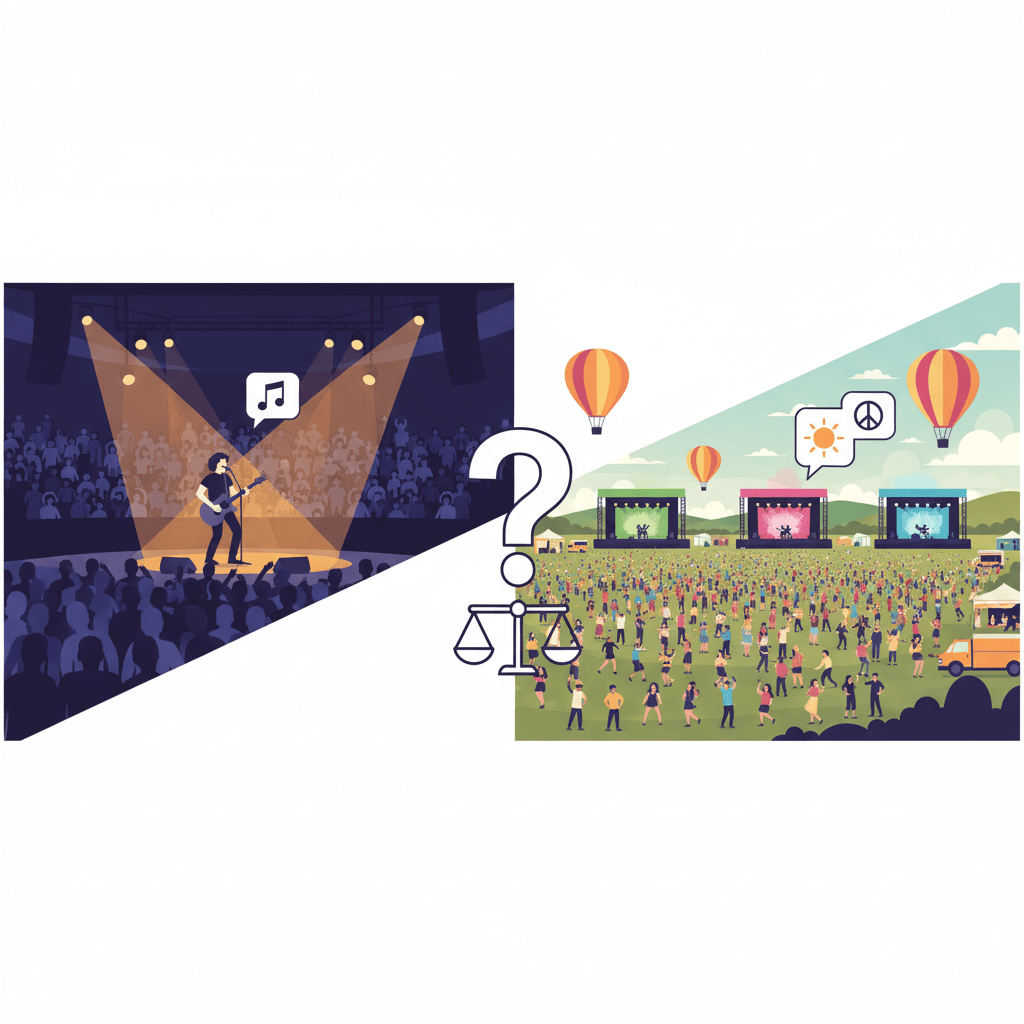
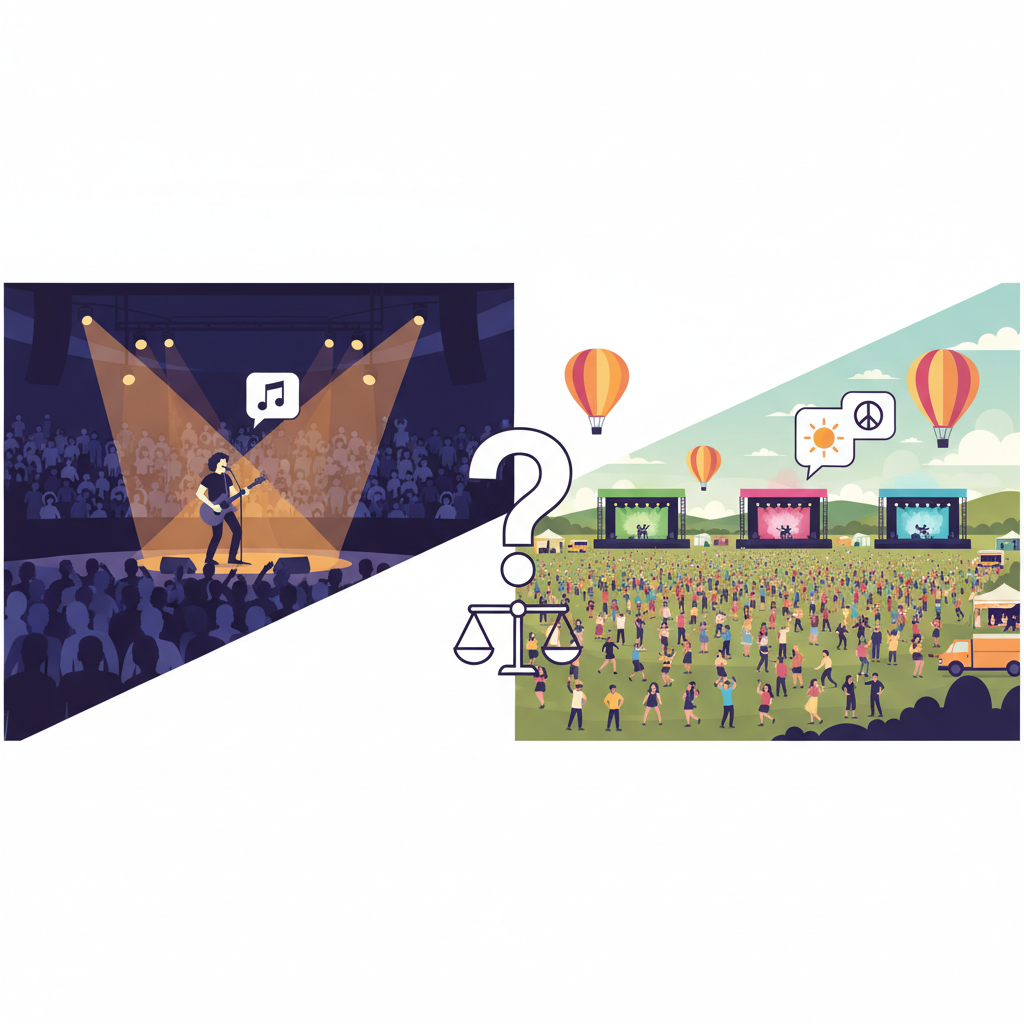
If you want a quick answer to the concerts vs festivals question: concerts put one artist at the center of attention; festivals scatter attention across multiple stages and days. That difference shapes everything — from ticket price and travel to crowd size and the type of memories you bring home.
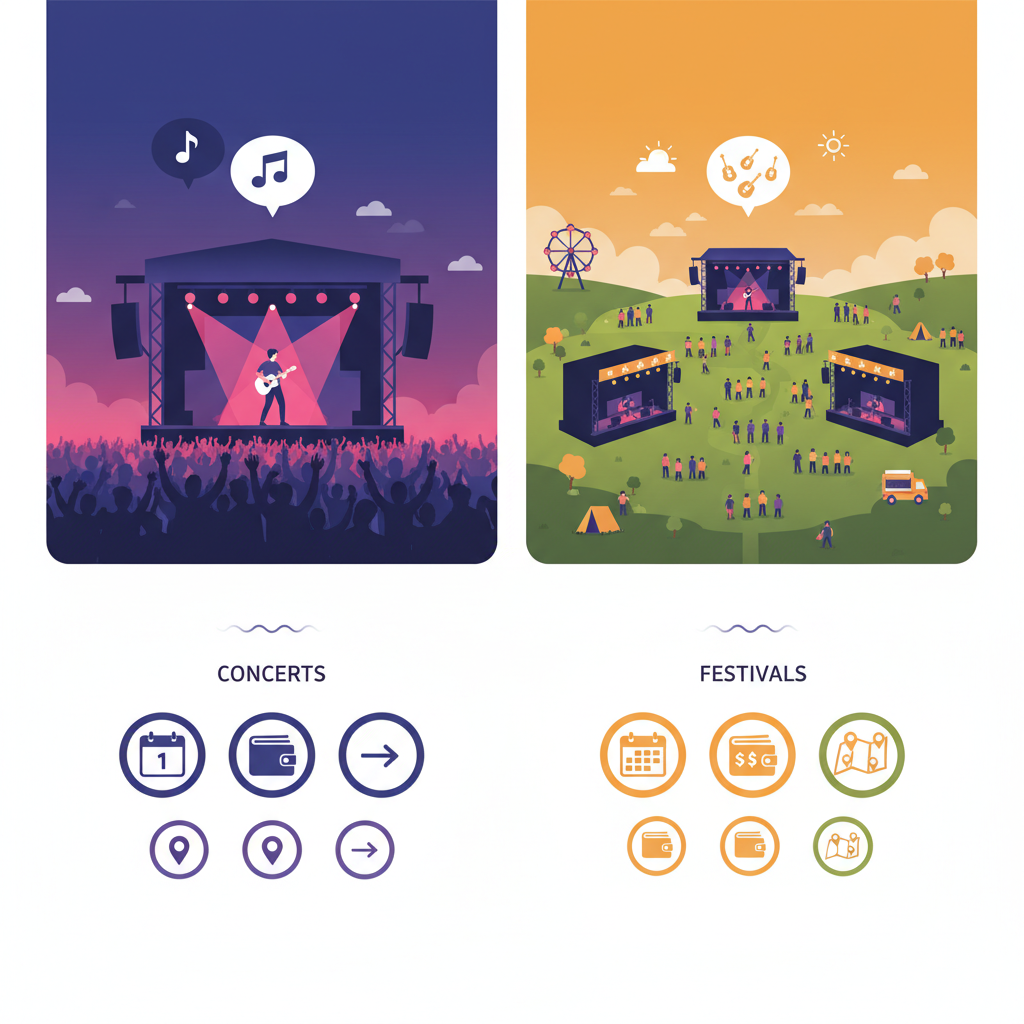
Concerts are events where a single artist or a small roster performs in a venue that’s designed for listening. Think arenas, clubs, and theaters with scheduled start and end times, fixed sets, and predictable production. Festivals are multi-act, often multi-day gatherings that can include dozens of performers, food vendors, merch stalls, art installations, and sometimes camping. For more on this, see Concerts and events guide.
Below are the core distinctions that determine which option fits you: the scale of production, the social dynamics, logistics, and the type of music discovery on offer. Each of these factors affects cost, comfort, and how you plan your day.
Choose the format that matches your priority: sound and focus, or variety and social energy.
Key concepts
- Focus: Concerts emphasize one performance; festivals distribute attention across multiple acts.
- Duration: Concerts are typically a few hours; festivals can run all day for multiple days.
- Environment: Concerts usually happen in controlled venues; festivals often use outdoor or multi-venue sites.
- Costs: A single concert often costs less than a multi-day festival ticket, but headliners can change that dynamic.
These basics set expectations. Later sections dig into how the experience differences affect planning, what to pack, and common mistakes fans make when they choose the wrong format for their priorities.
How it works
This section explains the practical mechanics behind concerts and festivals so you can compare them on equal footing. Follow these steps when deciding which to attend: consider time, budget, proximity, artist lineup, and personal tolerance for crowds and unpredictability.
Step 1: pick the priority. If hearing the artist clearly, seeing production details, and leaving at a known time matter to you, a concert wins. If you want to discover new acts, spend a day outdoors, or turn attendance into a mini-vacation, a festival fits better.
"Step 2: evaluate logistics. Concerts normally require one ticket, one travel plan, and one set of arrival and exit times. Festivals require layered logistics: transportation for multiple days (or a day with late-night travel), food planning, possibly a campsite, and knowledge of stage locations. To streamline your ticket purchasing process, consider the best websites for buying concert tickets, as festivals often have staggered set times, meaning you’ll frequently choose between simultaneous sets."
Step 3: budget and extras. For the same headline artist, a concert ticket might be cheaper than a festival pass that includes that artist plus many others. But festivals often include extras: art installations, workshops, vendor markets, and food options. Factor in add-ons such as parking, shuttle fees, camping permits, and on-site purchases. Decide whether the extras justify the higher total cost.
Step 4: crowd dynamics and safety. Concert venues typically control crowd size with allocated seating or well-managed standing areas. Security is focused on a single flow: entry, the show, exit. Festivals spread crowds across multiple locations and times, which can feel less claustrophobic but more chaotic. For example, getting between two distant stages during a peak set can take 10–20 minutes, so plan set priorities and consider some essential concert safety tips to enhance your experience.
Practical checklist (quick step-by-step):
| Step | Action | Why it matters |
|---|---|---|
| 1 | Identify top priority (sound vs discovery) | Keeps choices aligned with expectations |
| 2 | Research venue/site map | Avoid wasted time between stages |
| 3 | Budget total cost (tickets + extras) | Prevents surprise expenses |
| 4 | Plan arrival and exit times | Reduces stress and long waits |
Plan logistics first: travel, timing, and priorities decide whether the day feels smooth or stressful.
Quotable: "If you want clarity of sound and schedule, pick a concert. If you want variety and hanging out, pick a festival."
Best practices
This section gives actionable tips for getting the most out of concerts and festivals, and lists common mistakes so you don’t repeat them.
Packing and planning differ between the two formats. For concerts, pack light: tickets, ID, phone, charger, and ear protection if you’re close to the stage. For festivals, create layered plans: day bag with sunscreen, reusable bottle, cash/card mix, portable charger, and a small rain layer. If the festival allows camping, include a tent, sleeping bag, flashlight, and a simple first-aid kit. For more on this, see Festival packing checklist.
Timing is everything. For a concert, arriving 30–45 minutes early gets you through entry lines and a good spot. For festivals, arrive when gates open to orient yourself to the site map, find restrooms, and hear your first set without scrambling. If you plan to see specific artists, map their stage locations and note overlap windows so you can prioritize.
On etiquette: at concerts, respect sightlines and applause cues; in general, follow venue staff instructions. At festivals, expect more casual movement but still respect performer and crowd boundaries. Keep your belongings secure, and be mindful of space around others, especially on narrow paths between stages.
Common mistakes to avoid:
- Assuming every stage has great sightlines — many festival stages are shallow and crowded.
- Underbudgeting for food and transport at festivals — vendor lines and shuttle fees add up.
- Expecting a festival to replicate a headline concert’s production — not all festival performances have full lighting and sound mixes.
- Overplanning a single day at a festival without buffer time for delays between sets.
Decision checklist (table you can copy):
| Question | If yes, choose |
|---|---|
| Do you value audio clarity and stage production? | Concert |
| Do you want to discover new artists and enjoy a social scene? | Festival |
| Are you on a tight budget for one night out? | Concert (single ticket) |
| Do you enjoy multi-day outings or camping? | Festival |
Use this checklist to pick the experience that matches your priorities and tolerance for crowds and planning.
FAQ
What is concerts vs festivals?
Concerts vs festivals refers to two different live-music formats: concerts center on a single artist or tight lineup in a controlled venue, while festivals spread multiple artists across stages and often span a full day or multiple days. For more on this, see Music festival comparison.
How does concerts vs festivals work?
Concerts work by scheduling a single performance with a setlist, production crew, and a fixed start and end time, which simplifies logistics. Festivals work by coordinating multiple stages, staggered set times, vendor areas, and site-wide services, which introduces more variables and opportunities for discovery.
Quotable: "Pick concerts for focus; pick festivals for discovery and atmosphere."